Books
Two books on keeping church human
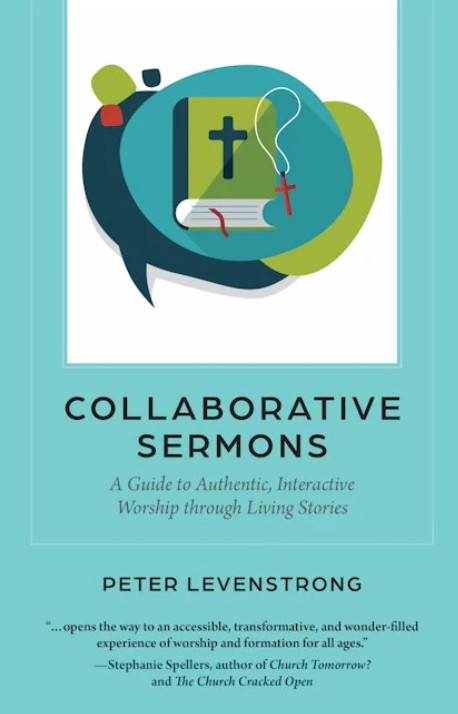
Collaborative Sermons
A Guide to Authentic, Interactive Worship through Living Stories
What it's about
Most sermons are one person talking while everyone else listens. This book makes the case that churches can deepen their people's faith by creating the sermon together, and it teaches one way to do that: Living Stories.
In a Living Stories sermon, the preacher tells a Bible story with wooden figures on a felt cloth, then asks open questions. The congregation, children included, answers out loud, and the sermon grows out of what they say. The method began at St. Gregory of Nyssa in San Francisco when we came back together after the pandemic. It grew out of Godly Play, a Montessori-style approach to children's faith formation, and it now gives adults the same chance to wonder out loud.
Also at Amazon · Barnes & Noble
What's inside
Imagine
Describes the method and compares it to a traditional sermon.
Trust
Makes the theological case for trusting Scripture, the people in the room, and the Holy Spirit.
Cherish
Argues for kinds of worship that churches often undervalue: worship for all ages, small and intimate worship, worship that supports neurodivergent people, and worship that welcomes people who have left church or never belonged to one.
Explore
The how-to manual. It covers preparing the materials, introducing the reading, telling the story, and leading the wondering, plus how to adapt the method to your own church.
If you want to start right away, read Imagine and Explore first.
From the introduction
I kneel and spread the underlay, putting figures in their places. I read Scripture aloud and move each figure or element as the story requires. Road here. Village there. Jesus approaching from the left. The crowd watching from a distance.
The story ends. It's time for the sermon to begin. I look up and get ready to listen to the congregation.
Grounded in research
The book draws on surveys and group interviews with preachers and participants from congregations using Living Stories. Sarah Bentley Allred, an independent researcher, gathered them in summer 2025 with a grant from the Calvin Institute of Christian Worship.
Reading it with a group?
Churches and clergy groups are reading it together. If you're planning a group study, get in touch about bulk copies or a Zoom conversation with me. To see the method in action, visit the Living Stories page.
What people are saying
Collaborative sermons are so much more than a style of preaching. Peter Levenstrong opens the way to an accessible, transformative, and wonder-filled experience of worship and formation for all ages.
This comprehensive, provocative, and practical book is sure to expand the homiletical imaginations of preachers and faith communities alike.
Of the many ways collaborative preaching is practiced, this is by far the most genuinely intergenerational approach I’ve seen.
More than just a sermon method, Collaborative Sermons genuinely welcomes readers into a surprising, effective, and holy experiment.
If you are a preaching minister for a church that is seeking to become more intentionally intergenerational, this book will help you transform your sermons into more engaging, formative experiences that will appeal to all generations.
Embracing AI in Ministry forthcoming
How High-Tech Tools Can Make the Church More Human
What it's about
Most church conversations about AI get stuck on whether to use it at all. This book asks where it belongs instead. My answer is a framework I call High-Tech Backstage, High-Touch Frontstage.
The backstage is the work you do alone: research, drafting, scheduling, newsletters, grant writing. The frontstage is the time you spend with other people: worship, pastoral care, the gathered community. Let AI take on as much backstage work as it can handle well, and put the time and attention you gain into the frontstage. Used this way, AI can make a church more relational.
Questions the book takes on
- Which tasks to hand to AI, and which ones need to stay yours
- Where to draw firm lines, like no pastoral care done by AI and nothing published that isn’t true
- How to think about the ethics, from which AI company to trust to the real size of AI’s environmental cost
- What happens to church staff jobs as AI absorbs more of the work, and what churches owe the people in those jobs
- How to keep your judgment when AI hands you polished work that looks finished
What this looks like in practice
The most hands-on thing I do is lead Living Stories sermons, with wooden figures, a felt cloth, and a room full of people talking. AI powers almost everything behind it, including preacher notes, story graphics, grant applications, and a newsletter for more than 600 subscribers. That backstage help is how one priest at a small parish can support preachers in dozens of congregations across denominations. AI never leads the conversation in the circle. That part stays human.
What readers of my AI writing are saying
His conviction that AI belongs backstage, so ministry can stay human frontstage, is one of the clearest frameworks I know. If you care about using AI well without losing the people at the center of church life, The Human Part is essential reading.
My Trinity Fellows colleague is writing about phenomenal work that strikes the harmony of tradition and innovation in congregational and faith-based settings.
I think Peter is writing excellently about the use of AI, especially as it relates to the Church.
Help shape the book
I'm collecting stories from church leaders about using AI in ministry: what worked, what didn't, and what surprised you.
Hear when it's out: subscribe to The Human Part